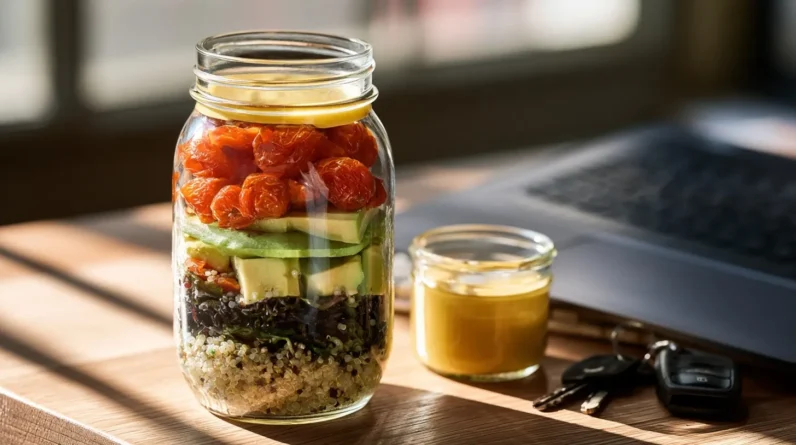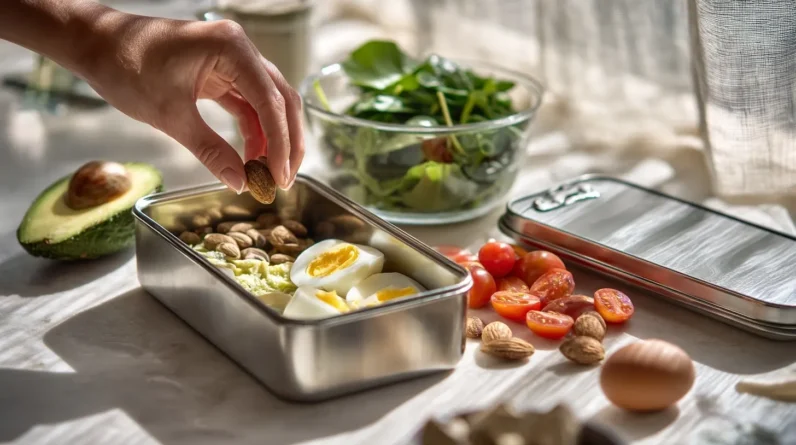




When you’re running a household like a business, nutrition has to work as hard as you do. Stock your kitchen with Greek yogurt, hard-boiled eggs, rotisserie chicken, and raw nuts—foods that fuel you without requiring effort. Batch-cook proteins and grains on Sundays, pre-portion snacks for your commute, and lean on canned salmon or hummus when time runs short. The right strategies make eating well feel effortless, and we’ve mapped out exactly how to build them.
Stock These 10 Grab-and-Go Staples for Busy Weeks
When life gets hectic, having the right foods on hand makes the difference between a nourishing meal and a drive-through detour. We’ve curated ten pantry essentials that deliver maximum nutrition with minimal prep: Greek yogurt, hard-boiled eggs, rotisserie chicken, pre-washed leafy greens, canned wild salmon, hummus, raw nuts, whole-grain wraps, frozen edamame, and fresh fruit. These aren’t just convenient snack options—they’re strategic building blocks for balanced meals. Each item pairs protein, fiber, or healthy fats to stabilize blood sugar and sustain energy through packed schedules. We recommend batch-stocking weekly so we’re never caught scrambling. Keep proteins visible at eye level, snack options accessible at the front, and produce prepped immediately after grocery runs. Preparation eliminates decision fatigue when we need it most.
Batch Cook Once, Eat Well All Week
Dedicating two to three hours on Sunday transforms the entire week’s eating without requiring nightly cooking effort. Strategic meal prep compounds your time management gains exponentially. Cook versatile proteins, roast vegetables in varied flavor profiles, and portion grains into measured containers for built-in portion control.
We recommend involving family members in age-appropriate tasks — washing produce, labeling containers — because family involvement builds ownership and reduces your solo workload. Leverage cooking shortcuts like sheet-pan roasting and pressure cooking to maximize output efficiently.
When ingredients run short midweek, master ingredient substitutions: swap quinoa for farro, chickpeas for chicken, spinach for kale. Prepare healthy snacks simultaneously — portioned nuts, sliced vegetables, hard-boiled eggs. One intentional Sunday session eliminates five chaotic weeknight decisions.
How Do You Sneak Nutrition Into a Packed Schedule?
| Moment | Nutrition Hack | Benefit |
|---|---|---|
| Morning commute | Pre-portioned snack ideas in your bag | Prevents reactive eating |
| After-school pickup | Family involvement in quick prep | Builds habits + saves time |
| Desk work | Hydration hacks like infused water bottles | Consistent intake without effort |
Layer meal prep into existing routines—blend smoothies while packing lunches, or double quick recipes during dinner. We’re not adding tasks; we’re stacking nutrition onto moments already in motion. When the family participates, accountability multiplies. Every shift becomes a leverage point when we stop treating nutrition as a separate obligation.
Build Meals Around What’s Already in Your Kitchen
Before opening a delivery app or mentally committing to a grocery run, scan what’s already on your shelves—most kitchens hold more meal-ready components than we realize. Pantry organization hacks like grouping proteins, grains, and canned vegetables together make this inventory check fast and intuitive. Once you see what’s available, meal improvisation tips become practical: pair canned chickpeas with pre-cooked rice and frozen spinach, or toss lentils with jarred tomatoes and dried spices. Research confirms that structured pantry systems reduce decision fatigue and food waste simultaneously. Label bins, rotate stock, and keep staples front-facing. When your kitchen is organized intentionally, you’re not scrambling—you’re executing. That shift from reactive to strategic transforms an ordinary pantry into a reliable nutrition engine you can access in minutes.
Fuel Smart on the Road Between Drop-Offs and Deadlines
Having a stocked, organized kitchen sets us up for success at home, but what happens when we’re in the car between school drop-offs and back-to-back meetings? A deliberate snack strategy prevents reactive, low-quality food choices. Pair protein with complex carbs for sustained energy boosters that don’t spike and crash.
Prioritize these portable options:
- Nuts and fruit: Balanced macros, no refrigeration needed
- Hard-boiled eggs and whole-grain crackers: Protein-dense, genuinely satisfying
- Water with electrolytes: Healthy hydration that supports cognitive function
Mindful eating doesn’t require a table—it requires intention. Even thirty seconds of noticing hunger cues before grabbing food improves decision-making. We perform at our peak when we treat fueling our bodies as non-negotiable, not an afterthought squeezed between obligations.
Frequently Asked Questions
How Do I Meal Plan When My Kids Have Completely Different Food Preferences?
We tackle picky eaters by using meal prep strategies built around a “base + customize” model. Cook shared components, then let kids personalize them. Rotate family favorite combinations weekly so everyone’s satisfied without doubling your effort.
What Are the Best Nutrition Apps Specifically Designed for Busy Working Moms?
Like a GPS for your health, we recommend MyFitnessPal and Cronometer—they’ve mastered calorie counting, recipe tracking, grocery planning, and meal reminders, giving us busy moms precisely what we need to optimize nutrition efficiently.
How Do I Handle Nutrition During Unexpected Schedule Changes or Emergencies?
We’re here to support you: stock emergency snacks like nuts and protein bars in your car and bag. When chaos hits, rely on quick meals you’ve prepped ahead—they’ll keep your nutrition on track effortlessly.
Can Good Nutrition Actually Improve My Focus and Productivity at Work?
Yes, we can absolutely achieve focus enhancement and a productivity boost through strategic nutrition. When we fuel our brains with balanced macros, stable blood sugar, and key micronutrients, we’re optimizing our cognitive performance and output daily.
How Do I Avoid Emotional Eating When Stress Levels Are Extremely High?
Like Odysseus resisting the Sirens, we’ll resist emotional eating by anchoring ourselves in mindful eating practices. When stress coping feels impossible, we pause, breathe, and identify true hunger signals before reaching for comfort foods impulsively.
Conclusion
We’ve covered the tools, the timing, and the tricks—now envision this: a fridge stocked with color, a counter prepped on Sunday, and a mom who grabs real food between car pools and conference calls without skipping a beat. Nutrition doesn’t demand perfection; it demands a plan. When we build systems instead of scrambling, we eat better, think sharper, and show up stronger for every role we’re already crushing.